
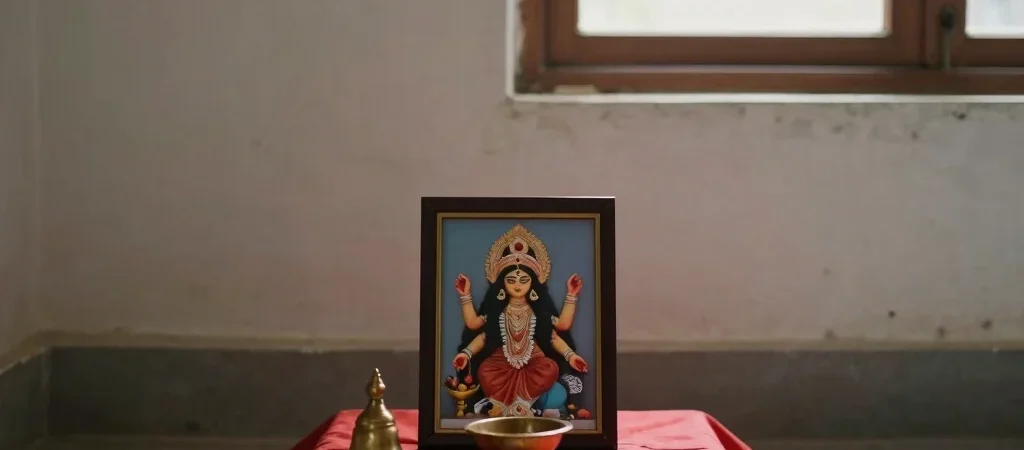
A Durga Puja memory often begins with a detail: the sound of a conch, a line learned by listening, or the quiet pause before an offering. Years later, that detail can bring a whole gathering back—not as a perfect picture, but as a connection to the people who shared it. Remembering is part of how a community carries its traditions forward.
Customs Carry Their Own Histories
Durga Puja is observed in many ways, shaped by family practice, place, and community. A ritual familiar in one household may be new to another, and neither experience has to stand for everyone. Asking who taught a custom, and what it means to those who keep it, can reveal more than treating tradition as a single fixed script.
Memory Makes Room for Change
Communities do not inherit culture unchanged. People bring old songs into new homes, explain a familiar observance to a child, or find that a once-distant story speaks differently with age. These acts of return and reinterpretation are not a departure from tradition; they are among the ways people continue to live with it.
Listen Before You Generalize
When someone shares what Maa Durga or Durga Puja means to them, their account is a doorway into one lived experience, not a definition for all Hindus. A thoughtful community publication can hold those accounts side by side, with care for their differences. Start with a story, ask a respectful question, and let the answer remain particular.